| Virginia Scientists
Newsletter of the Virginia Academy of Science |
Volume XXVIV, Issue 1 Winter 2026 |
|
|
|
President's Report Dear Members,
First, I want to express my gratitude to the officers who preceded me, those who currently work alongside me, and the new generation of VAS members who will continue our mission. The close collaboration between officers has made the first six months of my presidency a pleasure. We are undertaking important initiatives that will span several cohorts of officers, and I would like to summarize a few of those efforts below.
One of my initial goals was to recruit and onboard a new Executive Officer. We are fortunate to have welcomed Jonathan Tolbert. Jon brings a wealth of experience from both education and the private sector to VAS. With his support and leadership, we are updating our financial procedures, aiming for the highest level of transparency, and strengthening our connections with the broader community. I am pleased to announce that we are revitalizing our collaboration with the Science Museum of Virginia. I anticipate that holding regular meetings and special events at the SMV will increase our organization’s visibility among the citizens of Virginia. As we gain recognition, we will seek opportunities to attract donors and pursue grant funding to support our mission. Thanks to the leadership of President-Elect Craig Group, we are making substantial improvements to our website and the management of our membership records, paving the way for future membership growth.
For the first time in many years, we are nearing the completion of an audit of our financial practices and management policies. Based on their preliminary recommendations, we are developing a Policies and Procedures Handbook, a long-overdue effort to professionalize our practices.
As we prepare for our annual meeting this spring, hosted by Christopher Newport University, there is a spirit of optimism and possibility that propels us toward better days and sustained excellence. Thank you for your continued support and dedication to the Virginia Academy of Science. Warm regards, Christopher Osgood, PhD
President, Virginia Academy of Science |
|
|
Discover What VJAS Has to Offer!
Susan Booth, Director VJAS The Virginia Junior Academy of Science (VJAS) is one of the most dynamic and inspiring STEM opportunities in the Commonwealth—and this year, we’re excited to welcome even more students, teachers, judges, and supporters into our growing community. For students, VJAS opens the door to real scientific research. From designing experiments to presenting at one of the nation’s premier junior academies, students gain confidence, build leadership skills, and showcase their work before STEM professionals. Many walk away with awards, scholarships, and lasting connections that shape their future pathways.
For teachers, VJAS is a powerful partner in bringing authentic inquiry to the classroom. We provide the tools, structure, and support needed to guide student research—along with a professional network that celebrates the incredible work teachers do to inspire young scientists. For judges, VJAS offers a front-row seat to the next generation of innovators. Judges play a vital role in supporting students, sharing expertise, and experiencing the excitement of fresh ideas and discoveries. It’s a rewarding way to give back while staying connected to emerging STEM talent. For readers and the scientific community, VJAS publications highlight outstanding student research from across Virginia. These projects reflect creativity, dedication, and a deep love of science—making VJAS a trusted source of insight into the future of STEM. VJAS is more than a competition—it’s a celebration of curiosity, a catalyst for opportunity, and a community that believes in the power of young minds. Whether you’re presenting, mentoring, reading, or judging, your involvement helps fuel the spirit of scientific discovery.
Join us, support us, and help us continue to ignite the spark of science in Virginia’s youth! Check us out at vjas.org |
|
|
Membership Report
Craig Group, PhD, Membership Chair/Vice President Elect Dear members of VAS,
Today, I write to you as chair of the Membership Committee to report on the status of VAS membership. In short, VAS membership is strong, with over 350 members and growing! I want to start by saying that VAS appreciates every member, and we hope that everyone can find meaningful ways to be active in the academy. If you have any questions about your membership or ways to get more involved, please don't hesitate to reach out to me.
The last few years have been a challenging time for VAS membership. Transition from many years of the Conways shepherding VAS to new Executive Officers has been challenging, and modern tools were not in place to manage our membership. Last May, the VAS council approved funds to adopt a new membership platform, MemberLeap, as recommended by the National Association of Academies of Science (NAAS). Since then, the membership committee has been trained on the new platform, and our webpage and membership have been successfully migrated to the new system. This was a lot of work, but I’m confident it is the start of a new era for VAS.
The new system has been available since the Fall of 2025 and has many features that make it easier for members to engage and it provides features that enhance how we manage our membership and member events. We used the new tools for the 2025 Fall Undergraduate Meeting for registration, proposal submission, and judging. Even though it was our first event, it went amazingly well. There is also a new internal member area where you can manage your VAS membership, internal areas for your Sections and Committees, read this Newsletter, and we are working to provide many other opportunities for engagement. If you haven’t done so yet, I encourage you to log in and check it out!
VAS events and activities are already enriching the scientific activities of our members, but more members will enhance the value of membership and the impact of VAS. Please help us recruit more VAS members! Encourage colleagues and students to participate and take the time to explain the value of VAS. For me, the impact/cost ratio for young scientists is so high compared to a national or international meeting that I encourage every young scientist in my research group to attend. By low cost, I mean financial and temporal, as we keep registration fees low and most members can attend events without even spending a night in a hotel. I’m confident that every scientist in Virginia can benefit from attending one of our meetings!
VAS also provides an opportunity for scientific leadership. Section committee leadership provides opportunities for junior as well as senior scientists and is a rewarding way to serve the scientific community of Virginia. As VAS President-Elect (my other VAS hat), I am working to fill some of the leadership roles for 2026-2027, so if you are interested, please reach out to me. Finally, I want to thank everyone of you for your membership in VAS. Just by being a member, you are supporting research and other scientific opportunities in Virginia. VAS, thanks to its members, is making an impact in the Commonwealth! |
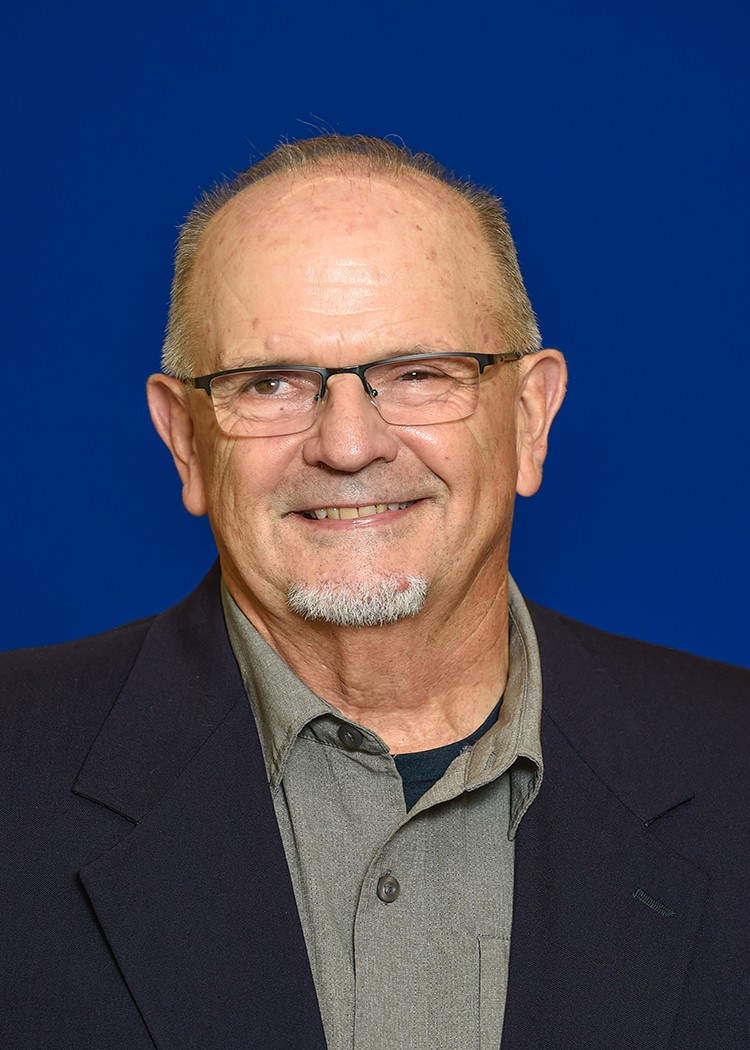
VAS Scientist Spotlight Christopher Berndsen, PhD
James Maidson University Nathan Kissner with contributions from Christopher Berndsen
Raised in Central Virginia, Christopher Berndsen earned a B.S. in Biochemistry from Roanoke College before completing a Ph.D. in Biomolecular Chemistry at the University of Wisconsin-Madison. He then pursued postdoctoral research in Biophysics and Biophysical Chemistry at Johns Hopkins University. In 2012, he began his independent career at James Madison University (JMU), where his work focuses on understanding the structure and function of protein complexes.
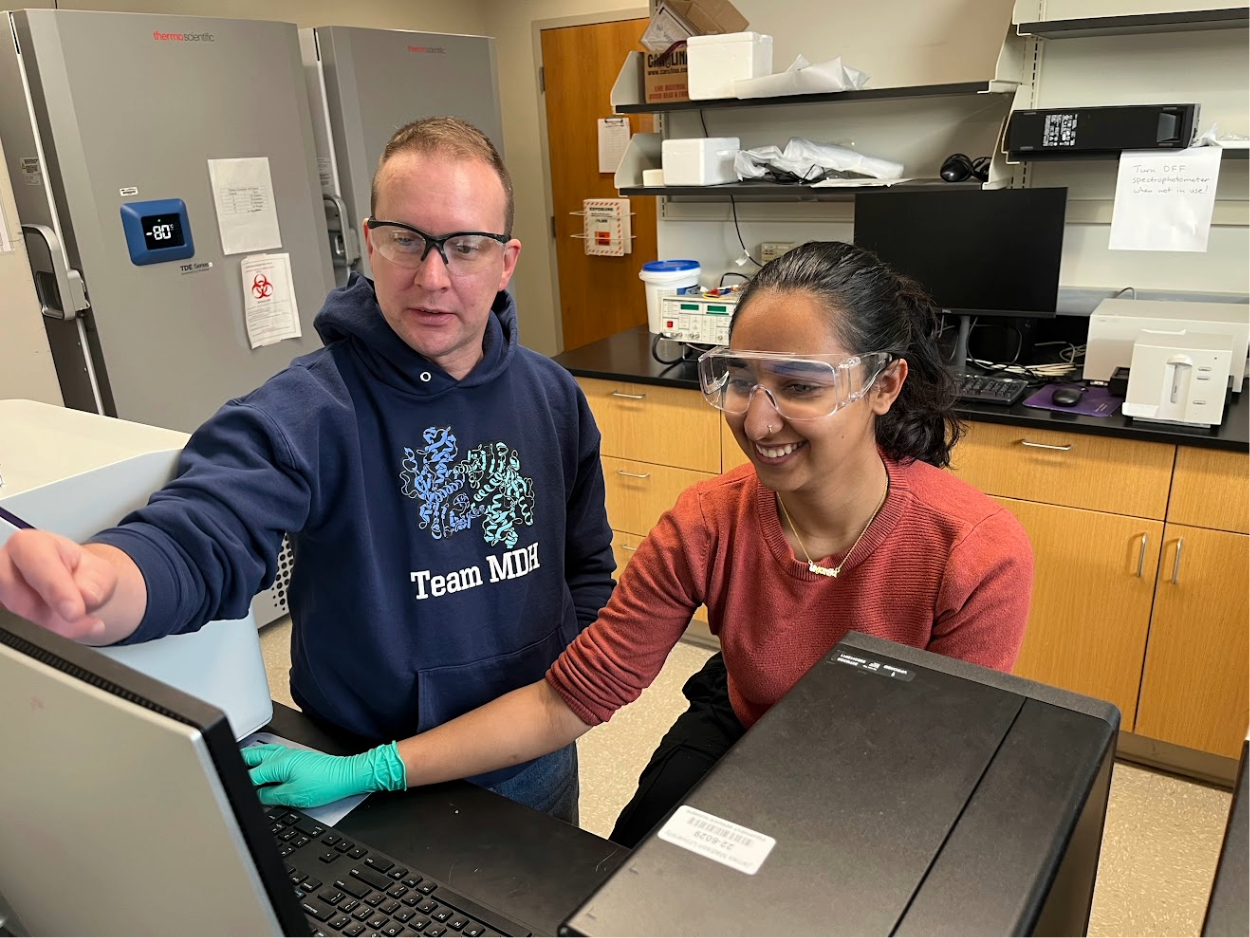
Over the past five years, his laboratory has concentrated on two primary research areas: metabolon complexes containing malate dehydrogenase and starch-degrading enzyme complexes. Most recently, his group described the structure and function of the first pseudoamylase, a pseudoenzyme that does not catalyze a reaction itself but instead regulates the activity of other enzymes. In this case, the pseudoamylase modulates alpha-amylase activity to control starch breakdown in response to stress. Chris’s ongoing work explores how this regulatory mechanism alters starch structure, with potential implications for materials science, nutrition, and bioenergy through greater genetic customization of plant starch.
At JMU, Christopher balances an active research program with a strong commitment to teaching and mentorship. He has mentored more than 70 undergraduates and three high school students, with his lab publishing over 25 peer-reviewed articles, most featuring undergraduate coauthors. His students have received awards from organizations including the Virginia Academy of Sciences, the American Society for Biochemistry and Molecular Biology, and the Annual Biomedical Research Conference for Minoritized Scientists. Research in his lab has been supported by the National Science Foundation, U.S. Department of Energy, VAS, the 4-VA program, and JMU’s College of Science and Mathematics. In addition, his group collaborates with K-12 teachers and students, engaging more than 250 participants in hands-on research experiences that promote scientific thinking.
Christopher’s involvement with the Virginia Academy of Sciences spans more than two decades. As an undergraduate at Roanoke College, he presented research at the 2002 Undergraduate Meeting and received VAS research funding. After joining JMU, he became a regular attendee of VAS annual meetings and has served as secretary of the Structural Biology, Biochemistry, and Biophysics section since 2018. In 2020, he joined the Research Committee and has participated in grant and award reviews each year.
As a member of the Research Committee, his vision centers on supporting and growing scientific research across the Commonwealth, at both large research institutions and smaller colleges. Recent updates to the award process reflect this goal, including moving the review timeline earlier to better support summer research, increasing award amounts to fund student stipends and supplies, and ensuring that all applicants receive constructive feedback. While refinement will continue, these changes aim to provide more equitable access to resources and strengthen Virginia’s research community as a whole.
|
|
|
The 103rd Meeting of the Virginia Academy of Science |
|
|
A Successful Spring Meeting at the University of Virginia Kieran Wall
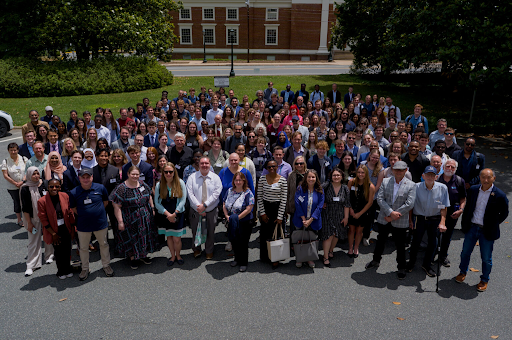
The 103rd annual meeting of the Virginia Academy of Sciences was held on May 22nd, 2025, at the University of Virginia. This year’s Spring meeting featured events all across the newly renovated science corridor at UVA, in a day that gave Virginia scientists the opportunity to showcase their research to colleagues from all parts of the Commonwealth.
The morning kicked off with invited and contributed talks in eleven parallel sessions, each focused on a different scientific discipline. One of the best parts of the Spring meeting is the chance for scientists to hear about work outside of their area of expertise – and it was wonderful to see Geologists stopping by the Biology section, Psychologists attending Entomology talks, and yes, even Physicists listening to Chemistry presentations. In total, the morning parallel sessions saw 75 talks, including 45 talks from undergraduates at Virginia institutions, many of whom were presenting for the first time.
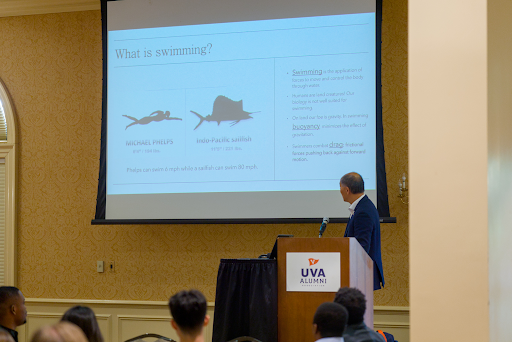
Following the parallel presentation sessions and section business meetings, folks made the brief walk to Alumni Hall for the lunch programming. After a filling catered lunch of fajitas, attendees heard remarks from the VAS executive committee as well as a recorded greeting from Senator Mark Warner. Headlining the lunch programming was the Sidney S. Negus Memorial Lecture, this year given by Professor Ken Ono, the STEM Advisor to the Provost and Marvin Rosenblum Professor of Mathematics at UVA. Professor Ono’s fascinating talk (summarized in greater detail in a dedicated article) focused on the success of his work integrating data analytics into training and strategy for the UVA Swim Team and Team USA at the Olympics. The afternoon continued with more invited talks and a poster session held in the Chemistry building atrium, in which 100 student researchers shared their work.
|
The 2025 Sydney S. Negus Memorial Lecture - Swimming in Data
Kieran Wall
The Negus Memorial Lecture has been held annually since 1965 and was delivered at the 2025 Spring meeting by Professor Ken Ono, STEM Advisor to the Provost and Professor of Mathematics at the University of Virginia. The talk focused not on Professor Ono’s impressive research work in Number Theory, but his recent efforts to apply math and physics to improve the performance of the world’s best swimmers. Ono’s groundbreaking analysis has been taken up by not only the UVA Swim Team but also Team USA on the Olympic stage.
“If you’re all wondering why other countries in the world and other colleges in the country aren’t doing this,” – using data-driven training strategies to boost athlete performance in the pool – “I can’t tell you how often I think that very question,” said Ono.
Sports and athletic competition are nothing new to Professor Ono, who, as a child, wanted to “be a professional cyclist that raced in the Tour de France.” Since then, Ono has competed in cycling, running, and most recently, off-road triathlon competitions. Ono first became engaged with college-level swimming as a professor at Emory University, home to a Division 3 men’s swimming program. Professor Ono was good friends with the coach, and one of his honors math students, Andrew Wilson, was a walk-on for the team. “He [Andrew] was a very poor swimmer,” noted Ono, at least until a chance encounter at a mathematics conference in Oslo. There, Ono spoke with a professor engaged in applying engineering and mathematics to cross-country skiing. Fascinated by the idea of optimizing athletic performance using math and physics, Ono worked with Emory’s coach to implement similar strategies to the Norwegian cross-country ski team.
Needless to say, Ono’s work had an immediate impact. Andrew Wilson went from being a walk-on and the “worst swimmer on the team” to a gold medalist at the 2020 Tokyo Olympics. Emory ascended to be a top-ranked D3 program in swimming, in no small part due to Ono’s physics and math-driven understanding of high-level swimming. When Professor Ono arrived at the University of Virginia in 2019, he immediately started working with UVA swimming to apply what he had learned at Emory. His research and analytics have helped drive the dynastic success of the UVA Women’s Swim Team, which won its 5th straight NCAA Championship this year.
“What I like about the science of swimming and a lot of sports is how complicated it is,” said Ono, “it’s not as easy as the problems that you might be given on a homework set… this is a real-world application.” Professor Ono’s perspective on swimming is one driven by a deep understanding of the physical forces at play, drag and buoyancy, and how athletes can manipulate them. To get a full picture, Professor Ono calculates drag statistics for each swimmer in different orientations in the pool. These statistics are used in concert with data from accelerometers, force paddles, and high-definition video to develop a “numerically optimized” version of each swimmer. Swimmers under Ono’s guidance focus not only on beating swimmers in the lanes around them but also on chasing their physical peak performance calculated through detailed measurements in practice and a little computational fluid dynamics. Using these “ghost swimmer” models, UVA and Team USA swimmers can make adjustments to their form, like stroke count, turns, and body positioning, to improve their performance in races.
Professor Ono had the chance to see his work in action at the 2024 Paris Olympics last Summer. There, Kate Douglass, who Ono knows both as a statistics student and a swimmer at UVA, won two gold medals. “I cannot tell you how exciting it is to see a student… walk on to the Olympic stage, then set their personal best… [and then] win a gold medal,” said Professor Ono.
Reflecting on his time as a technical consultant for the UVA Swim Team and Team USA, Professor Ono views it as an unexpected but deeply rewarding part of his career as a Mathematician – “If you’re planning to go into science, nobody tells you that your work might help your country win Olympic medals.” |
Scientist of the Year Awards Darcy Mays, PhD, Awards Committee
The Scientist of the Year Awards were established in 2024 by the Virginia Academy of Science to recognize scientists in Virginia who have conducted research that has benefited the Commonwealth of Virginia. The awards were developed by Dr. Richard Groover, Academy member and Fellow and approved by VAS Council. Winners receive a nice medallion and a framed certificate and are recognized at the
Awards Ceremony of the Annual Meeting. Recipients are of the four awards in 2025 are as follows.
The Wildlife and Biodiversity Award is awarded to a person who, in the last five years, has worked in Virginia and the science community, accomplishing outstanding research or wildlife management that has benefited the wildlife and biodiversity within the Commonwealth of Virginia. The recipient in 2025 was Dr. Lesley Bulluck, Associate Professor and Graduate Program Director of Environmental Sciences in the School of Life Sciences and Sustainability at Virginia Commonwealth University. Dr. Bulluck is a conservation biologist who is a fierce advocate for the preservation of Virginia’s rich biodiversity. Her research has explored the relationship between climate dynamics and the reproductive success of the Prothonotary Warbler. Her work reveals the profound impact of destabilized temperature regimes on Virginia breeding grounds and the increasingly extreme El Nino/Southern Oscillation precipitation cycles on their Central and South American wintering habitats. Her leadership in the study of Golden-winged Warbler conservation on private lands is also noteworthy, and it illustrates that the future of many of Virginia’s threatened species hinges on the stewardship of private landowners. Her nominators conclude with “she is an outstanding example of the dedication, expertise, and passion needed to safeguard our natural world.”
The Environmental Science Award is awarded to a person who, in the last five years, has worked in Virginia and the science community, accomplishing outstanding research or environmental science practice that has benefited the Commonwealth of Virginia. The recipient in 2025 was Mr. Michael Town, Executive Director of the Virginia League of Conservation Voters. Mr. Town manages a group of scientists and staff members who research, monitor, and lobby for environmental issues in the Commonwealth of Virginia. The breath of issues they address include clean water issues, The Chesapeake Bay protection, coal ash clean-up and removal, toxic waste, ending coal subsidies, offshore drilling, renewable energy, carbon reduction, climate and energy, transportation and planning of land use, and land conservation and parks. His nominator concludes with “Mr. Town and the Virginia League of Conservation Voters do an outstanding job protecting the Commonwealth of Virginia and are the most deserving of this award.”
The Life Science Award is awarded to a person who, in the last five years, has worked in Virginia and the science community, accomplishing outstanding research in life sciences that has benefited the Commonwealth of Virginia. Life sciences include biology, botany, and zoology. The recipient in 2025 was Dr. Jennifer Guler, Associate Professor of Biology at the University of Virginia. Dr. Guler’s research group is interested in understanding the fundamental rules that govern drug resistance evolution. She has made significant progress towards this goal using malaria parasites grown in her laboratory. Recent work has demonstrated that starving parasites prepares them to better withstand drug treatment. Dr. Guler is also a dedicated professor that is deeply committed to increasing awareness about microbial biology. Her nominator concludes “Dr. Guler’s research and education priorities help to protect and educate people across the state of Virginia. By bolstering understanding of microbes that cause infectious disease and the processes that contribute to drug resistance, this work has the potential to improve the lives of Virginians.”
The Physical Science Award is awarded to a person who, in the last five years, has worked in Virginia and the science community, accomplishing outstanding research in physical sciences, such as chemistry, physics, and geology, that has benefited the Commonwealth of Virginia. The recipient in 2025 was Dr. Nathan Kidwell, the G. Bruce Taggart Distinguished Associate Professor of Chemistry at the College of William and Mary. Dr. Kidwell’s research in physical chemistry focuses on problems at the interface between chemical dynamics and spectroscopy. Undergraduate students in Dr. Kidwell’s lab are collaborating in an interdisciplinary team with the Conservation International staff scientists, James City County, and students in Madagascar. His outreach to high schools in Virginia includes a partnership with the Governor’s School for Science and Technology to build an Internet-of-Things network of atmospheric monitoring devices. Dr. Kidwell received funding from the Camile and Henry Dreyfus Foundation to support the trip of Richard Zare, a Stanford University professor who has a compelling profile in public science advocacy. To summarize his accomplishments, Dr. Kidwell was selected as the 2024 Flygare Award winner, an international award given biannually to early career scientists that have made outstanding contributions to molecular spectroscopy.
The program is administered by the Awards Committee of the Virginia Academy of Science. Nominations for 2026 are due to the Awards Committee by March 15, 2026. Please contact Dr. Darcy Mays (dpmays@vcu.edu), Awards Committee Chair, to request a copy of the short nomination form if you wish to nominate someone. |
|
|
|
Greetings from the Science Museum of Virginia Rose Basom, PhD David and Jane Cohn Scientist at the Science Museum of Virginia
Happy New Year from the Science Museum of Virginia! My name is Rose Basom and I am not only the David and Jane Cohn Scientist at the Museum, but also the liaison between SMV and Virginia Academy of Science and a member of VAS. At SMV, I oversee the Science Content and Research team, steward our Scientific Interpretive Plan, ensure the quality and accuracy of the science content, and am leading the development of our new satellite location, the Northern Virginia Science Center.
We like to think of ourselves at the Science Museum of Virginia as a communications agency for science, and strive to connect the public with research and innovation in an engaging way, using informal science education. The Museum saw almost 600,000 visitors in 2025, highlighting the impact and reach of our institution. For a detailed snapshot of what we did in 2025, please review our annual report. If you are interested in ways you can get involved with us, please reach out to me at rbasom@smv.org – I am always happy to chat and explore opportunities.
We are excited to build on our partnership with VAS this year with a new initiative called Scientist Saturdays, where VAS members can sign up to spend a few hours at the Science Museum of Virginia on the last Saturday of each month to answer questions from the public about their area of science, provide an engaging activity, and get guests excited about your area of expertise. It is a great way to flex your science communication skills and work on broader impacts. If you are interested in participating, please sign up using this link before Friday, January 30th: Scientist Saturday Signup Form
I also want to share the amazing events and programming we have coming up at the Museum over the next year – you never know what may spark an idea for an opportunity to get involved with an event! -
Exhibits | Apart from our permanent galleries, we usually host 2 smaller exhibitions and a large, summer exhibition annually. In 2026, we will kick off with Power of Poison until April 19th. Our summer exhibition, Survival of the Slowest, opens May 23rd. We will wrap up the year with Rescue, opening July 13th.
I am excited about the new Scientist Saturday initiative between SMV and VAS, and look forward to developing our partnership further this year! |
|
|
Tribute to Arthur Wade Burke, Jr., PhD, MD
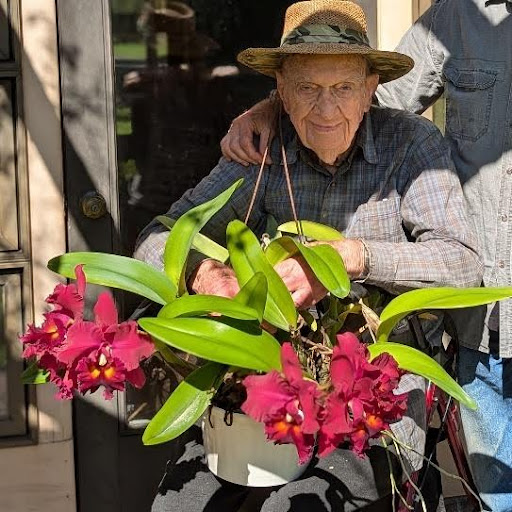
Richard Groover, PhD Virginia recently lost an extraordinary scientist, physician, and advocate for education. Dr. Arthur Wade Bruke, Jr. passed away peacefully on August 16, 2025, leaving behind a remarkable legacy of service to science, medicine, and the Virginia Academy of Science. Dr. Burke grew up in Richmond, VA and achieved his B.A. in Biology from the University of Virginia in 1948, followed by a master’s degree in 1949. He earned his Ph.D. in Biophysics from Saint Louis University in 1957 and later earned his medical degree from the Medical College of Virginia in 1960. His professional accomplishments in community medicine were significant and wide-ranging across the Commonwealth. Dr. Burke established the radiation therapy clinic at McGuire Clinic in Richmond, VA, assisted in the design of the cancer center at Mary Washington Hospital in Fredericksburg, and founded the radiation therapy department at Henrico Doctors’ Hospital, where he practiced until his retirement at age 70.
Outside of medicine, Dr. Burke was deeply involved in the horticulture of orchids. Living on a modest property in Hanover County, he built an elongated greenhouse and cultivated a collection of more than 3,000 orchids. As an active and long-term member of the Virginia Orchid Society, he served in numerous roles, experimented extensively with orchid cultivation, and developed several hybrid species. Dr. Burke also formed a lasting relationship with Lewis Ginter Botanical Garden in Richmond, VA, donating numerous plants while also establishing a trust to support their continued care.
Dr. Burke’s impact on the Virginia Academy of Science was profound. He served on Council for many years and was President of the Academy in 1975-1976, helping guide the organization through strategic planning and growth. Most notably, Dr. Burke generously donated thousands of dollars to support Academy programs, particularly student awards and scholarships. In many cases these gifts honored fellow Academy members. Today, funds established by Dr. Burke provides more than $20,000 annually to undergraduate and graduate students at colleges and universities across the commonwealth. The total value of these invested funds now exceeds $500,000.
More than anything else, Dr. Burke was committed to student learning. During an Interview for the Academy’s Centennial, he reflected:
“The establishment of the Virginia Academy of Science had a salutary role on education in Virginia. It drew together biology and other disciplines to promote camaraderie across statewide academics…later strengthening pre-college science knowledge and understanding through the Junior Academy of Science.”
Susah Booth, Director of the Virginia Junior Academy of Science, summarized his contributions best: “Art Burke meant more to VJAS than a title or a role - he represented its heart.”
Donations in Dr. Burke’s memory may be made to the Virginia Academy of Science Fellows Fund or the Virginia Orchid Society Founders and Friends Endowment. |
Dr. Burke with one of his beloved orchids. |
A Conversation with Jonathan Tolbert Executive Officer, Virginia Academy of Science
Deborah Neely-Fisher
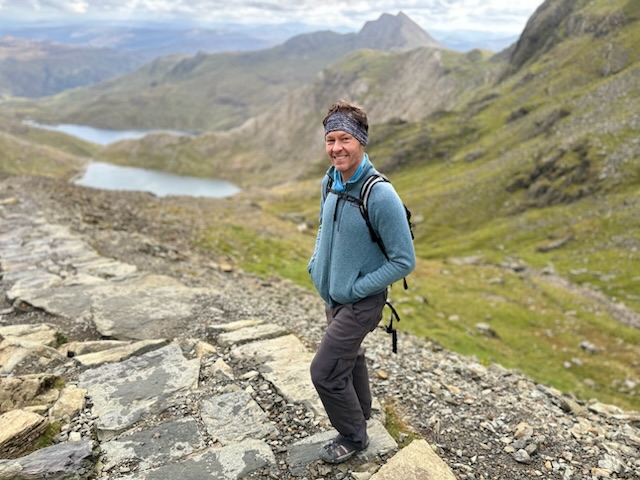
Jonathon’s vision for the Academy is one grounded in relationships, curiosity, and shared purpose—bringing together scientists, educators, students, and the public to strengthen science in Virginia. Jonathon also enjoys spending time with his children, his fiancé, traveling, playing soccer in a long-running Richmond adult league which he is the manager of, and hiking with his Rhodesian Ridgeback.
In early January, Jonathon Tolbert sat down with Deborah Neely-Fisher for a conversation about his background, leadership style, and vision for the Virginia Academy of Science. A lifelong Virginian, Jonathon brings decades of experience in education, communication, and relationship-building to this new role.
Jonathon grew up in Roanoke and attended Virginia Western Community College before completing his undergraduate degree in English literature at VCU. He spent more than 20 years teaching middle and high school students, including serving as an Exceptional Education teacher. More recently, he worked as a senior editor at CoStar on the Homes.com project, helping produce detailed profiles of thousands of neighborhoods across the country. He is currently back in the classroom helping students complete their high school careers through credit recovery.
What drew Jonathon to this position was the opportunity to connect people, ideas, and systems in support of science. Lacking a traditional scientific background, he sees his role as expanding the work of scientists by building strong organizational structures, fostering partnerships, and expanding access to STEM opportunities.
Jonathon is intent on strengthening the Academy’s internal processes. He is working with members of the executive committee to document procedures and institutional knowledge through the development of a comprehensive handbook, helping ensure continuity and making service in leadership roles more accessible. At the heart of Jonathon’s approach is collaboration. He likes to create spaces, literal and figurative, where members can pursue projects they are passionate about, whether through public engagement efforts like the Ask a Scientist program at the Science Museum of Virginia or new initiatives that expand the Academy’s reach across Virginia.
Another focus is strengthening the connection between the Virginia Junior Academy of Science and the Academy. He is especially passionate about early STEM exposure and mentoring. He reflected on how limited guidance about scientific career pathways shaped his own life pathway—and how the Academy can help students imagine broader possibilities. When I was young, I saw Gorillas in the Mist and wanted to be just like Dian Fossey. But my counselors and teachers didn’t know how to help me pursue that career. If I’d had more exposure to STEM pathways, my career might have looked very different. Jonathon loves that students who win the VJAS have the opportunity to attend the American Junior Academy of Science. I want to know what they gain from those experiences, how do we foster and support curiosity early, so students can imagine themselves in scientific careers?
I believe that relationships are foundational. I like to challenge myself and take on things that feel uncomfortable. That mindset has shaped my life in many ways; I am motivated by the belief that I’m capable of learning and growing. That’s what I hope to bring to the Academy: a willingness to try new things, learn from setbacks, and keep moving forward together. |
Science Around The Commonwealth |
|
|
The Capital Region Land Conservancy's Varina LandLab Jonathon Tolbert, Executive Officer, VAS
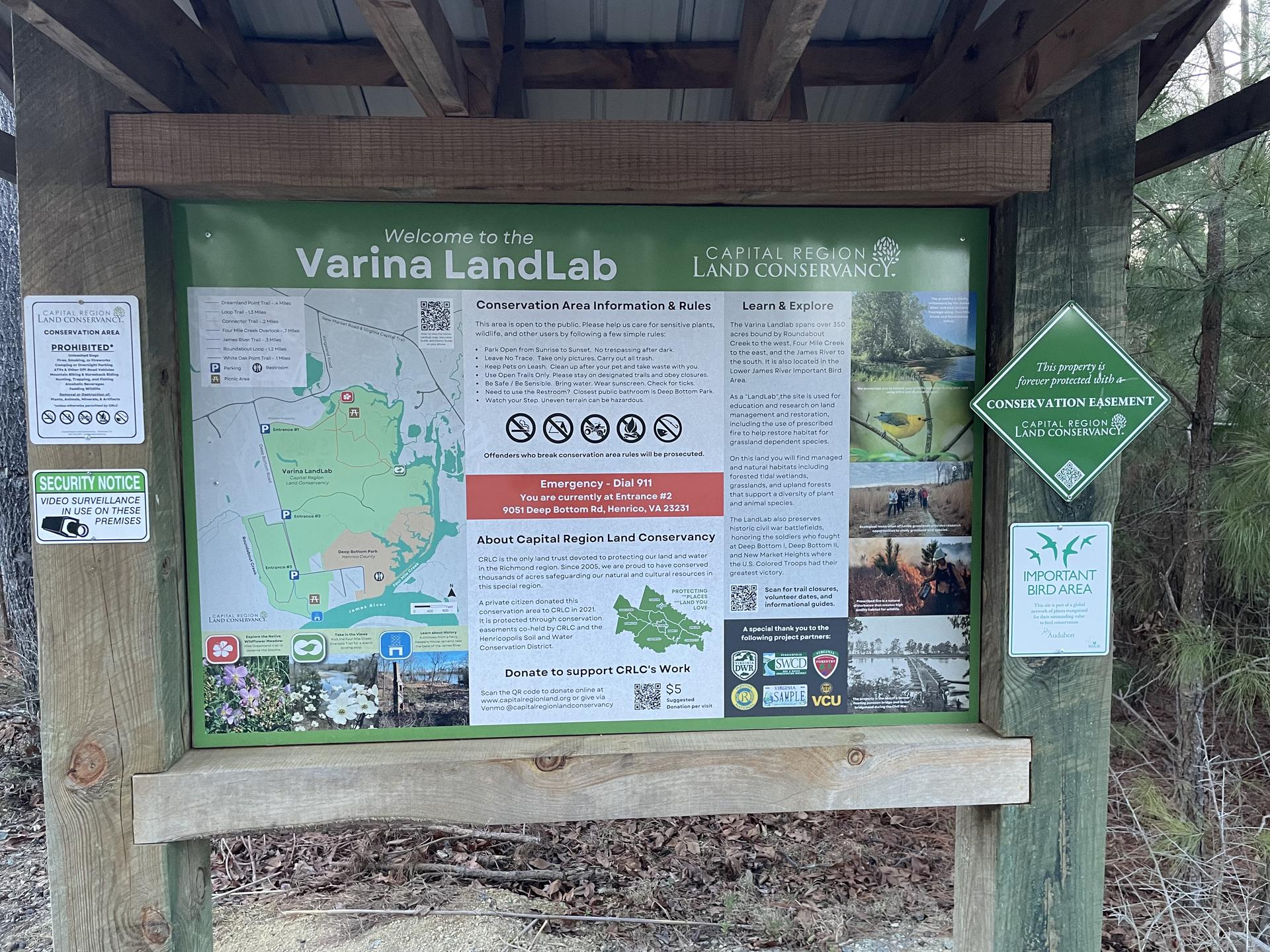
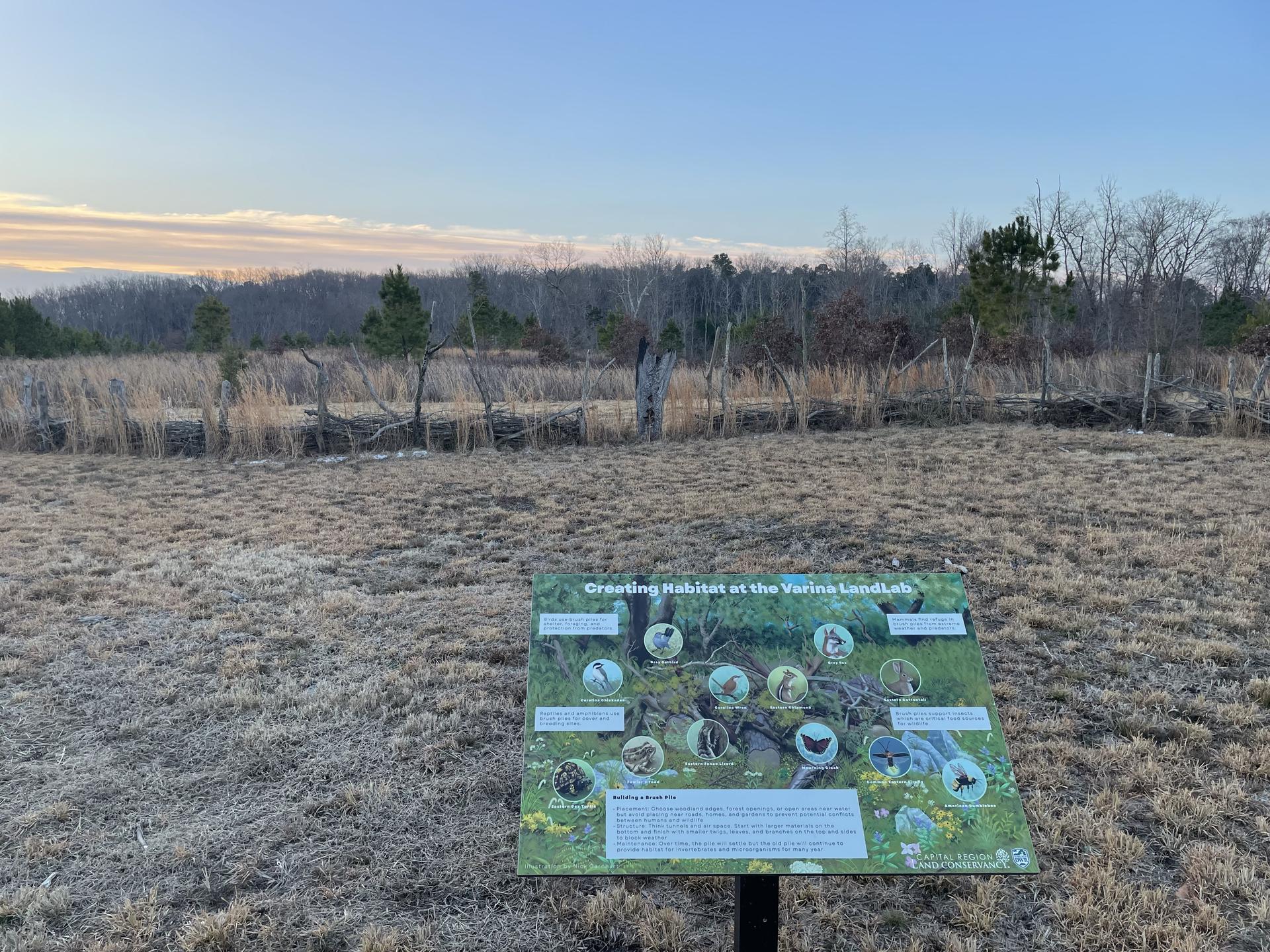
Just over 10 miles from Downtown Richmond, in Henrico’s Varina community, the Central Region Land Conservancy’s Varina LandLab’s 350 acres include 5 miles of trails, conservation projects, and birding, shared by residents, enthusiasts and academics. The area, purchased in 2021, fosters the non-profit’s mission of “conserving the natural and historic resources of Virginia’s Richmond region for the benefit of people and nature” by preserving rural land in the growing suburb of the state’s capital.
According to Executive Director Parker Agelasto, the LandLab’s name reflects a desire to allow residents to “learn from hands-on, tactical things to teach people about very different subject matters.”
The CRLC has partnered with Henrico County Schools to enable students to visit, which, Agelasto jokes, resulted in logistical challenges, like allocating turnarounds for buses and installing port-o-johns. Professors also frequent the lab, conducting research and projects. VCU’s Dr. Ed Crawford partnered with the lab to improve the land hydrology, establishing vernal pools, improving habitats and ecosystems. Similarly, VCU ornithologist Dr. Leslie Bullock designed a multi-year project, tracking the migration patterns of prothonotary warblers and counting other bird species. She explained the Landlab’s location, 25 minutes from VCU, makes it an extension of her classroom.
Agelasto says the LandLab compliments VCU’s Rice River Center: the former focuses on aquatic resources and wetlands, and the LandLab is upland, a very different habitat. Angelasto also says the CRLC is focusing its efforts on studying continued prescribed burns. The study will help the Department of Forestry, according to Angelasto, “understand what our native, indigenous landscape looked like, which included Pine Savannah, now no longer present.” Further, the initiative could create a training opportunity for firefighters or educate landowners on the value of prescribed burns.
Community members, likewise, use the space. It is a stop on the annual Hopewell Christmas Bird Count, a 24-hour event covering a circle, 15 miles in diameter. More regularly, birders identify species via eBird, which Bullock denotes helps monitor bird populations. Herpetologists and ornithologists have led community hikes to educate about the environment and its inhabitants.
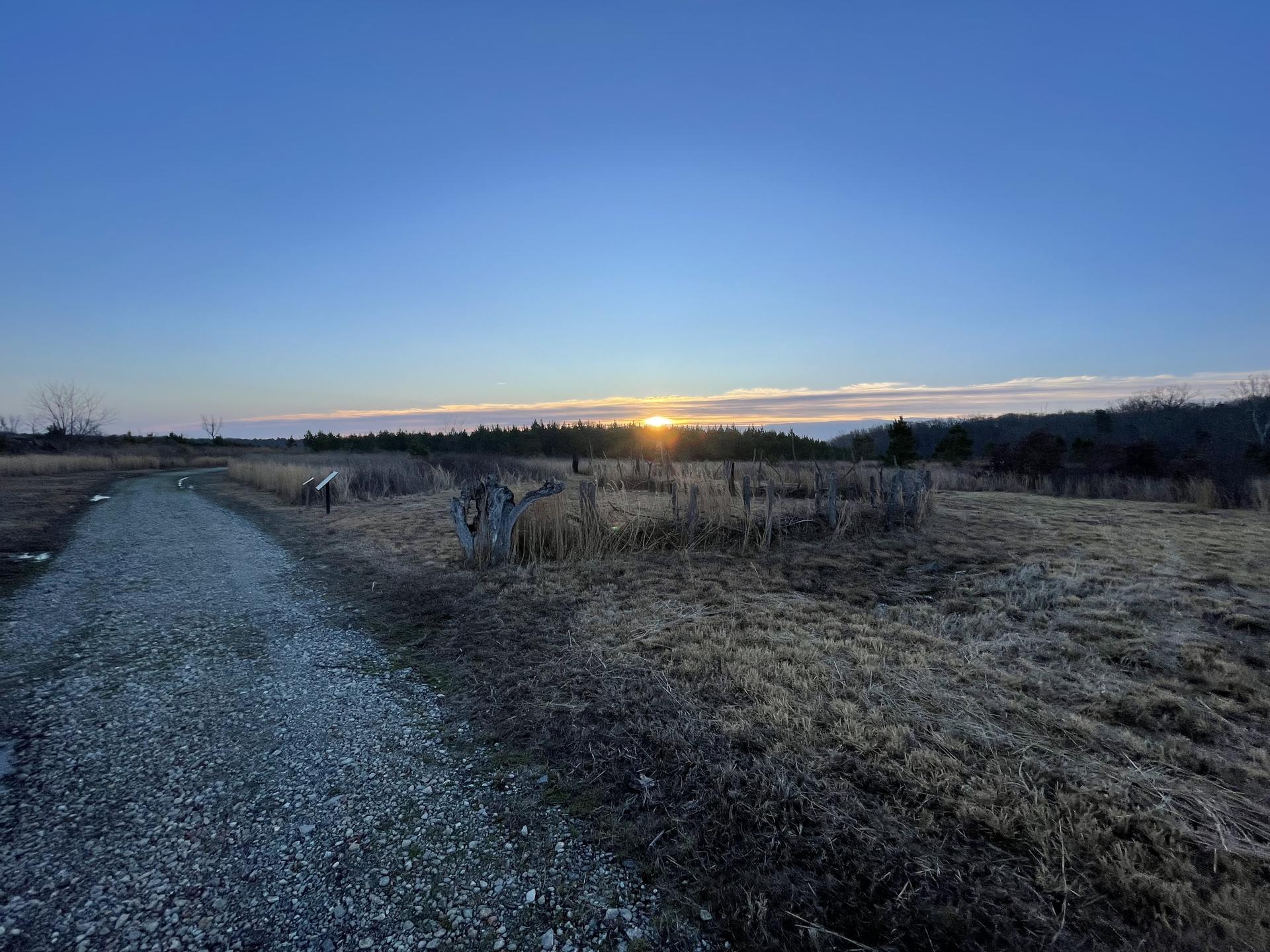
As a 20-year Varina resident, I was, admittedly, a bit embarrassed I was unaware of the parcel, located just miles from my home. So, one frosty January morning, I laced up my boots and took to one of the LandLab’s gravely trails. Spending an hour there and covering 4 miles, I found a serene environment complimented by well-placed, informative signage that helped me understand the ecosystem and the good work the CRLC is doing, from the prescribed burns at the Reece Camp Center to monitoring bird migrations in the surrounding region, but also the larger, 3,000-mile Atlantic Flyway, of which the area is a part. Further, I’d be remiss if I failed to mention that you can catch beautiful sunsets, or in my case, dynamic Varina sunrises.
How you can help? - Donate to the Central Region Land Conservancy
-
Contact the organization and lead a hike
- Collaborate on a project
- Just visit
|
| |
|
The Virginia Flora Committee Celebrates its Centennial and Looks to the Future
Marion Blois Lobstein – Professor Emeritus Northern Virginia Community College, Member and Former Chair Virginia Flora Committee, Life Member Virginia Academy of Science and Academy Fellow
By the 1920s many Virginia biologists realized the need for a statewide organization such as North Carolina Academy of Science, established in 1902, and the national American Association for the Advance of Science in 1848. With the founding of the Virginia Academy of Science (VAS) and the subsequent 1926 establishment of the Academy’s Virginia Flora Committee, the stage was set that led to the development and publishing of the modern Flora of Virginia in 2012.
In 1920, the following nine Virginia biologists met in Richmond to organize the Association of Virginia Biologists (AVB): Ivey F. Lewis (University of Virginia), Paul Merriman (University of Richmond), W. D. Hoyt (Washington and Lee University), Earl J. Grimes (College of William and Mary), H. E. Hayden, Jr (University of Richmond), W. L. Dolly (Randolph-Macon College), P. F. Fackenthall (Medical College of Virginia), D. W. Davis (College of William and Mary), and Flora Bryson (East Radford Normal School). Lewis, Merriman, Hoyt, and Grimes were botanists who were interested in the collection and documentation of local flora and publishing related material.
The AVB met in 1921 and 1922 but many members realized the need to include other scientific disciplines to form a state organization. Many of the AVB founding members presented papers at those meetings. In 1923, the last meeting of AVB occurred and the first meeting of the Virginia Academy of Science was held at College of William and Mary.
In 1925, Arthur B. Massey of the Virginia Polytechnic Institute became active in VAS. In 1926, Massey proposed the idea of a Committee on the Virginia Flora. At the 1925 VAS Council meeting, Lewis supported this motion and a $50 grant was approved for this Ad Hoc Committee on the Virginia Flora, now known as the Virginia Flora Committee or Flora Committee. At the 1926 VAS Biology Section meeting, Massey presented a paper proposing “A Complete Flora for the State of Virginia.” A petition to the VAS Council was proposed and accepted for the Flora Committee to “seriously undertake the preparation and ultimate publication of a Flora of Virginia.” The first Flora Committee was appointed and included: Massey, Hoyt, Warren, and Lewis (Chair). A $50 grant was given to this Ad Hoc committee and the VAS Virginia Flora Committee was established in 1926 as a VAS committee. Lewis served as chair of the committee until 1935 followed by Massey who served as chair until 1965. Other Flora Committee chairs have included Dorothy Bliss, Alton Harvill, Martha Roane, Miles Johnson, Michael Hill, Rex Baird, Marion Lobstein, Conley McMullen, and Woodward Bousquet.
The following was the original mission of the Virginia Flora Committee: Promote the study of and publications of the flora and vegetation of Virginia. Sponsor symposia and conferences on the ecology, conservation, and preservation of the plant life of Virginia. Disseminate botanical information to all who are interested in the flora and ecology of Virginia. Serve as liaison between the Academy, government bodies, and institutions in matters pertaining to the plant life of Virginia.
During the Flora Committee’s first years, the Committee was active and, in 1931, published Flora of Richmond and Vicinity (exclusive of Grasses, Sedges and Trees) by Paul R. Merriman, University of Richmond (UR). Merriman had been a founding member of ABV. Merriman’s 353-page book, published posthumously, included over 700 species with dichotomous identification keys and was illustrated. The first herbarium at UR was assembled by Merriman in connection with his Flora of Richmond and Vicinity; unfortunately, his collections were destroyed in 1925 in a fire.
From 1934-1939 the Flora Committee published the Claytonia: Quarterly Journal of Virginia Botany, the first recurring publication of the Academy. Plans are underway to make these journal issues available in digital form. Claytonia contained articles exclusively on the botany of Virginia and was edited by Ruskin Freer. In 1940, in order to broaden the variety of articles from other Academy sections, Claytonia became the Virginia Journal of Science. Freer continued to serve as editor along with Col. Robert Carroll.
The primary mission of the Academy’s Flora Committee was to “promote the study of and publications of the flora and vegetation of Virginia.” There were steps taken towards realizing this mission. Over the next seventy-five years, a number of Flora Committee and other Academy members and their graduate students conducted floristic studies of many areas in Virginia with the goal of producing a flora for Virginia. Based on these studies conducted over the first 35 years of the Flora Committee and other sources, in 1961 Massey published the Virginia Flora: An Annotated Catalog of Plant Taxa Recorded as Occurring in Virginia, which was the first ever checklist of plants in Virginia. This work included 3500 taxa and distribution information.
In 1967, the Flora Committee began publishing Jeffersonia: A Newsletter of Virginia Botany. This was originally named A quarterly Newsletter of the Flora Committee. Alton Harville and Stewart Ware served as the first coeditors. This publication ran until the late 1990’s. Other editors were Leonard Marrow, Howard Smith, Martha Roane, Michael Hill, and Rex Baird. Efforts are underway to make these newsletters available in digital form. In 1970, Alton Harvill, active on the Flora Committee, published his Spring Flora of Virginia. Massey’s checklist as well as Harvill’s own work, provided the basis for this book with dichotomous keys, brief descriptions, geographic distribution, rarity, and illustrations by his wife Barbara Harvill.
In 1977. a little over 50 years after the Flora Committee founding and with Academy support, Harvill published Part I of the Atlas of the Virginia Flora. Due to financial and other concerns, Harvill organized the Virginia Botanical Associates which published the Part I and Part II (1981) subsequent editions of the Atlas through the early 1990s. This Atlas, essential to the development of the Flora for Virginia, is now in digital format at https://www.vaplantatlas.org/. All of these accomplishments laid the foundation for a modern flora for Virginia. Many members of the Flora Committee, Donna Ware, Charles Stevens, Dorothy Bliss, and Peter Mazzeo, participated in this first Atlas Parts I and II as well as the second edition including Ted Bradley, Charles (Moe) Stevens, Tom Wieboldt, and Doug Ogle.
In 1999, with support of the Flora Committee, chaired by Rex Baird, a Small Project Grant was provided to assess the feasibility of developing a modern Flora for Virginia. Seventy-five years after the Flora Committee was founded, in August 2001, with the support of funding from the Academy and other partners, the Foundation of the Flora of Virginia Project (FFVP) or Flora Project was established. Marion Lobstein and Donna Ware, a current and a former member of the Flora Committee respectively, served on the first FFVP board of directors. In 2002, the Flora Committee supported a symposium on the Flora of Virginia Project, which brought further attention to this endeavor.
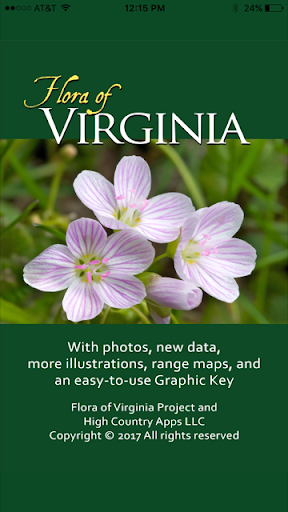
2026 is the 25th anniversary of the founding of FFVP. The FFVP’s mission has been “to inspire conservation of Virginia’s native flora through education, outreach, and production of the Flora of Virginia, in print and electronic formats.” This goal was achieved in 2012 with the publishing of the Flora of Virginia manual and, in 2017, with the release of the electronic version of the Flora of Virginia as an App. The support and generosity of the Virginia Academy of Science and its Fellows as well as other partners (the Virginia Botanical Associates, the Division of Natural Heritage, the Virginia Native Plant Society, and the Lewis Ginter Botanical Garden), other organizations, and many individuals made this possible. The role of the Flora Committee was essential to the achievement of the goal of a modern Flora of Virginia and continues to be represented on the FFVP board of directors by Flora Committee member Conley McMullen.
As the Flora Committee recognizes its centennial, the current members Woodward Bousquet (chair), Conley McMullen, Robert Wright, John Hayden, and Marion Lobstein plan for the continuations of the original goals of the Flora Committee in the area of education, public awareness, and support of the FFVP.
Notes: Special thanks to John Hayden and Conley McMullen for their editorial suggestions.
Please contact Marion Lobstein at mblobstein@earthlink.net for a list of references used in research for this article as well as list of former Flora Committee chairs and members. |
|
|
Announcements, Upcoming meetings, and VAS events The Science Education Committee
The Science Education Committee is preparing to launch a new initiative in which Academy members individually working with Virginia K-12 STEM instructors who request help with scientific content and/or innovative ideas for engaging students in the classroom. This initiative will help instructors who may need assistance with teaching new required materials in their subject areas or simply need a refresher on specific content.
The Committee is seeking the help of Academy members who would be willing to serve as a potential mentor for a K-12 STEM instructor. We seek prospective mentors for K-12 instructors in an array of content areas and others who would be interested in developing this initiative. If you would be interested in becoming involved in this effort or simply have questions (or additional ideas for other initiatives), please contact Mike Wolyniak, Science Education Committee Chair, at mwolyniak@hsc.edu. Thank you for your consideration!
Graduate Recruting tables available at the Spring Meeting
The Virginia Academy of Science hosts an annual meeting where roughly 200 of the state's top science students present their research. The meeting this year will be on May 28th at Christopher Newport University. This year, we are offering all graduate programs in Virginia the chance to come and recruit students. Do you know a graduate program interested in sending someone? It is $250 for a recruiting table, which includes two registrations and lunch. Limited pace is available. Send inquiries to vasoffice@vacadsci.org 2026 VAS Annual Meeting
The 104th Annual Meeting of the Virginia Academy of Science (VAS) will be held May 28, 2026 at Christopher Newport University, Newport News, VA. A council meeting will be held on Friday, May 29, 2026. There is still time to register! Click here to reserve your spot! 2026 VJAS Annual Symposium
The Virignia Junior Academy of Science (VJAS) will be holding its Annual Symposium on May 2, 2026 at Hampden-Sydney College, Farmville, VA. In-person judges are still needed to help with the reading and scoring of research papers and oral presentations. Click here to find out more! Donations
Interested in donating to VAS? Via our new website platform, you can donate to fund awards, scholarships or operating funds. Please designate where you'd like your funds allocated when donating. Click here to donate now! New Outreach Opportunity: Scientist Saturdays at the SMV
The Membership Committee is collaborating with the Science Museum of Virginia to offer Science Saturdays each month throughout 2026. This is an opportunities for members to connect with the community to showcase science. If interested, contact Craig Group rcg6p@virginia.edu or Jonathon Tolbert vasoffice@vacadsci.org |
|
|
|